This article may contain affiliate links. If you buy through them, Joyful Family Days may earn a small commission at no extra cost to you. Learn more.
There was a version of Thanksgiving we used to attempt that involved multiple side dishes I had never made before, a table setting that took an entire afternoon, and a general sense that the day was supposed to look like something out of a magazine. I do not know exactly when that expectation crept in, but by the time I noticed it, I had spent several years feeling quietly worn out by a holiday that is supposed to be about gratitude and togetherness rather than execution.
The turning point came during a Thanksgiving where I spent so much of the day in the kitchen that I missed most of the actual conversation happening in the next room. I remember standing at the stove listening to my kids laughing with their grandparents and feeling a strange sense of loss, like I was hosting a day I was not actually getting to be part of.
Deciding what the day was actually for
That feeling pushed us to ask a basic question we had somehow skipped for years. What did we actually want out of Thanksgiving. Not what we thought a good Thanksgiving was supposed to include, but what we, specifically, as this family, wanted to feel by the end of the day. The answer turned out to be simple. We wanted to be together, unhurried, without anyone exhausted from the effort of putting the day on.
Once we had that answer, a lot of the production started to look optional. The side dishes that took hours and that nobody particularly loved got cut. The table setting got simpler. We stopped trying to host a version of the day designed to impress anyone who might be watching, because nobody was watching except the people we already loved.
A holiday built to look good in photos and a holiday built to feel good in the room are not always the same holiday.
What we actually cut
We cut down the number of dishes to the ones that people genuinely ask for every year, rather than trying to cover every traditional option out of a sense of obligation. We started sharing cooking duties more deliberately, so that no single person, meaning me, ends up carrying the whole meal alone while everyone else relaxes.
We also stopped trying to make the day a single unbroken celebration from morning to night. There is a stretch in the afternoon now where people nap, or watch something quiet, or just sit outside if the weather allows it. That stretch used to feel like wasted time to me. Now it feels like the actual point of a day meant for rest.
The kids do not measure the day the way I used to
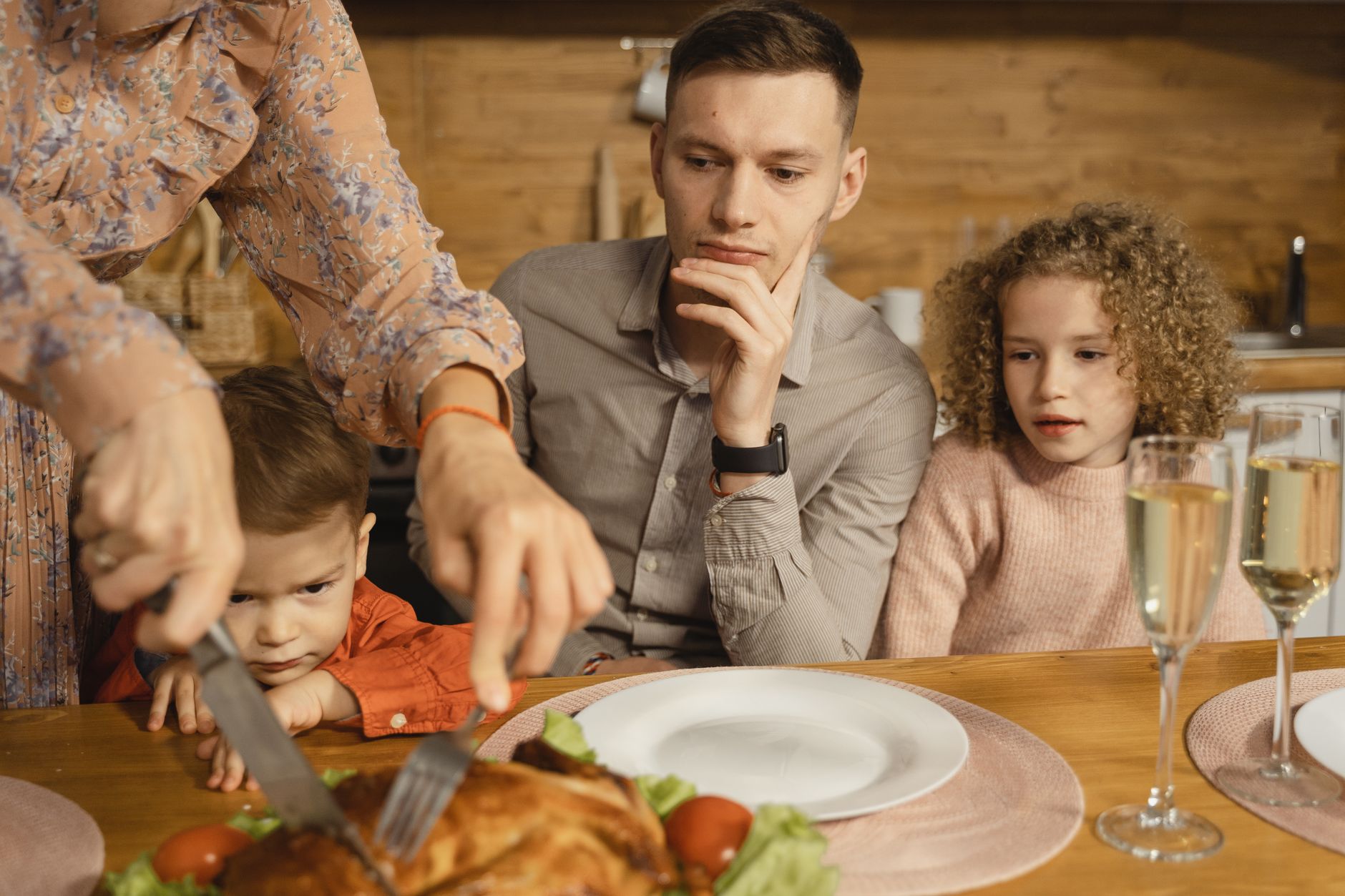
When I ask my children what they remember about Thanksgiving, they do not mention the food much at all, aside from a couple of specific favorites. They talk about a game that got played after dinner, or a cousin who visited, or the fact that nobody rushed them to leave the table. They do not seem to notice or care that the meal itself has gotten simpler over the years.
This has been one of the more freeing realizations in scaling back the holiday. The parts I was working hardest on, the elaborate spread, the perfectly set table, were largely invisible to the people I was doing it for. What they noticed was whether the day felt calm, and whether the adults around them seemed present rather than frazzled.
Handling the relatives who expect more
Not every family member adjusted easily to a simpler Thanksgiving. There was an adjustment period where a relative commented on the smaller spread, or asked why a particular dish was missing. We found it easier to be direct about the change rather than apologizing for it. We are keeping things simpler this year, we would say, and let the sentence stand without over explaining.
Most people came around once they saw that the day was still warm and still full of the things that actually mattered, the conversation, the company, the general sense of ease. A few comments here and there did not undo the benefit of a day that no longer left one person depleted by evening.
Gratitude does not require a production
There is something worth noticing in the fact that Thanksgiving, a holiday centered on gratitude, had somehow become, in our house at least, a day centered on output. The bigger and more elaborate the meal, the more we seemed to think we were honoring the occasion. Scaling back forced us to separate those two things, the gratitude and the production, and to notice that the gratitude had been there all along, underneath all that extra effort, waiting for room to actually be felt rather than performed.
We still cook a real meal. We still set the table with some care. But the day no longer requires a full week of preparation, and it no longer leaves anyone too tired to enjoy the actual hours we spend together.
A smaller day, held more loosely
If there is a single shift I would point to, it is holding the day more loosely. Fewer dishes held loosely. A shorter guest list held loosely. A schedule with actual gaps in it, on purpose, rather than a day scheduled tightly from the moment guests arrive until they leave.
Thanksgiving without the whole production is not a lesser version of the holiday. It is closer, in our experience, to what the day was supposed to be about from the start.