This article may contain affiliate links. If you buy through them, Joyful Family Days may earn a small commission at no extra cost to you. Learn more.
For a long stretch of years, Christmas morning at our house ran on a hidden clock. Stockings first, then presents in a certain order, then breakfast, then the drive to see family, all of it timed so tightly that if one kid woke up early or another one dawdled over wrapping paper, I felt the day slipping sideways before it had even properly started. Nobody had ever told me the morning had to move that fast. I had just decided, somewhere along the way, that a good holiday was an efficient one.
It took a particularly rough December to notice what that pace was costing us. We were unwrapping gifts so quickly that half of them barely got a second look before we moved to the next box. My youngest asked if we could go back and look at something he had already opened and put aside, and I remember feeling almost annoyed at the interruption, which is a strange thing to feel on a morning meant for exactly that kind of pause.
What we changed, and what we did not
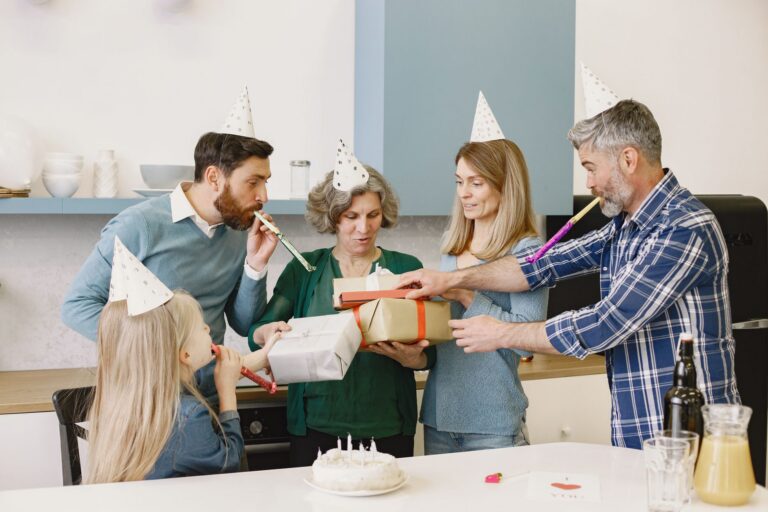
We did not cancel any traditions or decide that presents did not matter. We just stopped treating the morning like something to get through. The next year, we opened one gift at a time, going around the room, everyone watching everyone else. It took twice as long. Nobody minded.
We also stopped stacking so much into a single day. Instead of gifts, then a full breakfast, then driving across town for a family gathering, then evening plans on top of that, we picked one anchor event and let the rest of the day stay open. Some years that meant seeing extended family the day after instead of squeezing it in before noon. Some years it meant a slower breakfast that started an hour later than we used to allow ourselves.
The morning did not get shorter. It just stopped feeling like something we were behind on.
The part where expectations still show up
I want to be honest that slowing down did not erase the pressure entirely. There is still a version of Christmas morning that exists in my head, built from other people’s photos and other families’ traditions, and it still whispers that we should be doing more, buying more, decorating more elaborately than we do. That voice does not go away just because you decide to ignore it once.
What helped was naming it out loud to my husband. When one of us starts spiraling about whether the tree looks sparse compared to what we saw online, we say so, and usually saying it out loud is enough to deflate it. The tree looks like our tree. The kids do not compare it to anyone else’s.
Kids do not need the choreography
One thing that surprised me is how little the children cared about the parts I had been most anxious about. They did not notice or comment on the fact that breakfast was simpler than in years past. They did not seem to register that we skipped the elaborate stocking reveal order I used to plan out. What they remembered, when I asked them afterward, was sitting on the floor in pajamas for a long time, and the dog getting into the wrapping paper, and an argument over whose turn it was to hand out the next gift that ended in laughter rather than tears.
None of that required planning. If anything, it required less of it. The unscheduled parts of the morning, the parts where nothing in particular was supposed to be happening, turned out to be the parts that stuck.
Making room for the day to be uneven
Holidays are not evenly good all the way through, and I think pretending they should be is part of what makes them exhausting. Some hours are wonderful. Some hours involve a toddler meltdown over a broken toy, or a teenager who would rather be texting a friend than sitting with the family. We used to treat any dip in the day as a sign we were doing the holiday wrong. Now we treat it as just part of the shape of the day, the same way any long stretch of time with people you love has its flatter moments mixed in with the good ones.
This shift mattered more than any specific change to the schedule. Once we stopped expecting the whole day to be a highlight reel, the actual highlights stood out more clearly, because we were not straining to manufacture them the whole time.
What a smaller version of the holiday actually looks like
In practice, our current Christmas morning involves fewer presents than it once did, spread out over more time. It involves a breakfast that is genuinely easy to make, something we do not have to fuss over, because nobody wants the person cooking to miss the morning entirely. It involves music playing quietly rather than a lot of activity happening at once. And it involves accepting that by early afternoon, everyone is a little tired and a little cranky, and that this is a normal part of a full day rather than evidence that something went wrong.
We still see extended family. We still have a tree and stockings and all the familiar pieces. The difference is mostly in the pacing and in what we expect from ourselves. The morning is allowed to be ordinary in places. It is allowed to have a lull. It does not have to be the best morning of the year to count as a good one.
Why this felt worth writing down
I think a lot of families quietly assume that everyone else has figured out some formula for a perfect holiday morning, and that if their own morning feels chaotic or plain or a little disappointing in places, they are missing something the rest of us know. I do not think there is a formula. I think there is mostly just a family, in a room, on a morning that will not repeat exactly this way again, doing their best with the version of the day they have this year.
Slowing down did not make our Christmas mornings perfect. It made them feel like ours, which turned out to matter more than I expected.