This article may contain affiliate links. If you buy through them, Joyful Family Days may earn a small commission at no extra cost to you. Learn more.
There were two years, back to back, where we did not throw a birthday party for either of our kids. It was not a decision we made all at once or with much confidence. The first year, it happened almost by accident, a busy stretch of life that left no room for planning, and the second year, we chose it on purpose, curious whether the previous year’s simpler approach had actually been fine or whether we had just gotten lucky.
I want to be honest that going into that first skipped year, I felt a real amount of guilt about it. Birthdays felt like one of those things a parent was supposed to show up for in a visible way, and a party felt like the visible proof that we had shown up. Without one, I worried my child would feel the absence even if he did not say so directly.
What we did instead
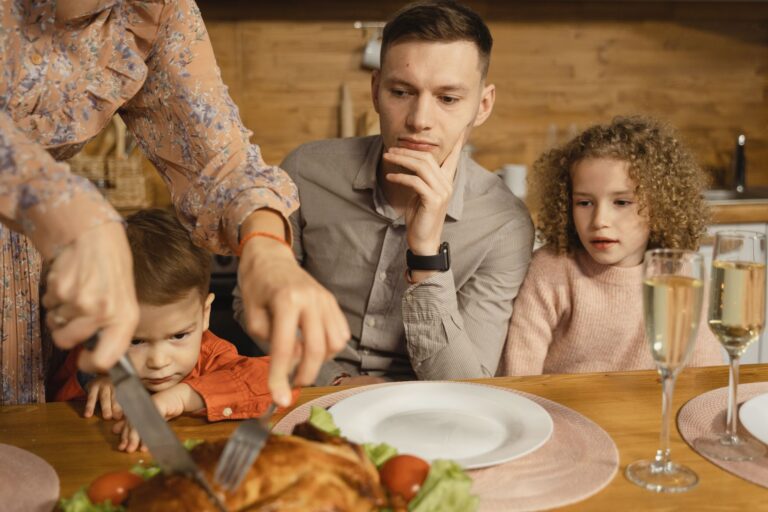
Instead of a party, we did a day built around things the birthday kid actually liked. One year that meant a full day focused on an activity he loved, just the two of us and his sibling, followed by a dinner he picked out. Another year it meant one friend coming over for the afternoon rather than a full guest list, with more time for actual play than a party format usually allows.
The days were quieter. There was no guest list to manage, no favors to prepare, no cleanup afterward involving balloons and wrapping paper scattered across the living room. There was just the day itself, arranged around what the birthday child specifically wanted rather than around what a party is generally expected to include.
A party is one way to mark a birthday. It is not the only way, and it is not automatically the best way for every child, every year.
What I expected to happen, and what actually happened
I expected some disappointment, at least a little bit of comparison to friends whose birthdays came with bigger celebrations. What actually happened surprised me. Neither of my kids brought up the lack of a party unprompted. When I asked directly, checking in to make sure they were not secretly disappointed, both said they liked how the day went. One specifically said he liked that it was not too much, that a big party sometimes felt like a lot of people to keep track of and not enough time with any one of them.
That comment stuck with me, because it named something I had not considered. A party, especially for a child who is more reserved, can be its own kind of pressure, a performance in front of a room full of guests rather than a relaxed day of being celebrated.
Why we went back to parties sometimes, and why that is fine too
We did not stop having parties forever. In later years, we have thrown some, when a child specifically asked for one and seemed excited about the format rather than just assuming it was expected. The point was never that parties are bad. The point was that we had been defaulting to a big party without ever really asking whether it was the right shape for that particular kid, that particular year.
Now we ask each year. Some years the answer is a party. Some years the answer is a quiet day with one friend. Some years it is just our family. The format changes based on what the child wants and what our life looks like that season, rather than following a fixed formula every single year regardless of circumstances.
The comparison trap
A lot of the pressure around birthday parties, at least for me, came from a kind of quiet comparison with other families, seeing what other kids’ birthdays looked like and measuring our plans against that picture. Skipping the party for two years broke that habit in a useful way, because it forced me to stop measuring our celebration against anyone else’s and instead ask what actually served our specific child on that specific day.
I still notice the comparison instinct sometimes. It has not disappeared completely. But I trust it less than I used to, because I have direct evidence now that a birthday without a big party can still feel completely full for the child at the center of it.
What actually made those years feel special
Looking back, what made those two skipped-party years feel meaningful was not the absence of a party itself. It was the attention that went into the day instead, the fact that the whole day, not just an afternoon slot, was shaped around the birthday child’s actual preferences. A party often gets planned around logistics, guest lists, timing, food for a crowd. A quieter day gets planned around a person.
That distinction mattered more than I expected it to. It is not an argument against parties. It is an argument for asking, honestly, each year, what the day is actually for and who it is actually supposed to serve.
What I would tell a parent feeling the same guilt
If a parent is skipping a party this year, out of necessity or by choice, and feeling the same guilt I felt, I would say the evidence in our house points the other way from what I feared. The kids remembered the attention and the specific choices we made for them far more than they remembered or missed the party format itself. A birthday can be small and still be entirely theirs.