This article may contain affiliate links. If you buy through them, Joyful Family Days may earn a small commission at no extra cost to you. Learn more.
For years, dinner in our house got decided the same way every single night: whoever noticed the clock first and felt the most guilt. That usually meant one of us ended up cooking four or five nights a week without ever agreeing to it out loud. Nobody assigned it that way. It just settled there, the way water finds the low spot in a yard.
We did not realize how lopsided it had gotten until one of us said, almost as a joke, that they could not remember the last time they picked what was for dinner. That comment sat with us longer than it should have. It was not really about cooking. It was about noticing who carries the mental math of a household and who gets to walk in the door and ask what smells good.
The conversation we should have had sooner
We finally sat down on a Sunday afternoon, not to fight about it, but to actually map out the week. Who has a late meeting on Tuesdays. Who is wiped out after taking the kids to practice. Who genuinely does not mind cooking and who is just doing it because someone has to. That last question mattered more than we expected. One of us actually likes cooking when there is no pressure attached to it. The resentment was never really about the stove. It was about it feeling mandatory instead of chosen.
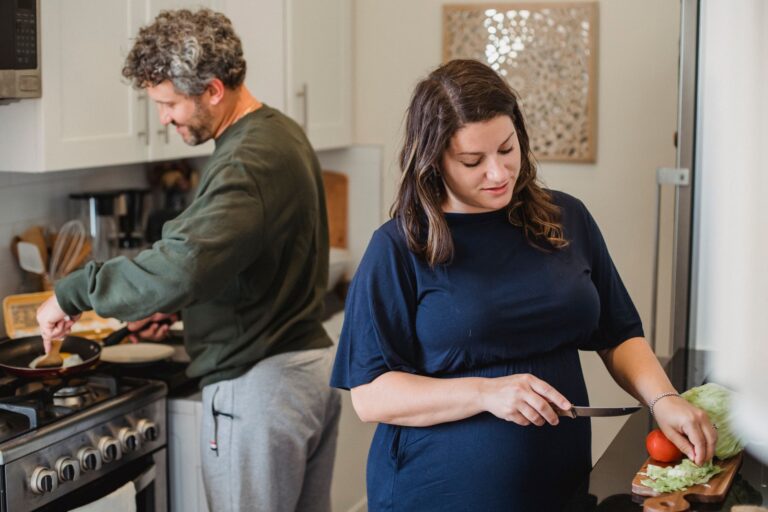
So we tried something simple. We picked three nights each that belonged to one person, and left one night open for whoever had the lighter day. It sounds almost too basic to matter, but writing it down changed the feeling of the whole week. Nobody was guessing anymore. Nobody was hoping the other person would offer.
What surprised us
The biggest surprise was how much lighter the non-cooking nights felt once they were actually off the hook. Before, even on nights we were not cooking, we were still hovering nearby, half helping, half supervising, not really resting. Once a night was clearly someone else’s, we let it be theirs. We sat down. We asked the kids about their day instead of narrating the recipe out loud.
Letting the kids in on it
Once we had our own rhythm figured out, our older kid noticed the pattern on the fridge calendar and asked if they could have a night too. We were hesitant at first, mostly because we pictured extra mess and a longer prep time. Both of those things turned out to be true, and we decided we did not mind.
Their night is usually something simple, a pasta they know how to make or breakfast for dinner, which nobody in this house has ever complained about. What we noticed is that on their night, they take it seriously in a way that surprised us. They check the fridge earlier in the day. They ask what everyone wants instead of just deciding. It gave them a small piece of ownership over something that used to just happen to them.
The point was never a perfect rotation. It was making the invisible work visible enough that everyone could see it and share it.
What we do on the hard nights
Not every week goes according to plan, and we stopped pretending it would. Some weeks the schedule falls apart by Wednesday because someone got sick or work ran long. On those nights we have a short list of backups that do not require much thought: eggs and toast, a frozen pizza dressed up with whatever vegetables are about to go bad, sandwiches eaten on the couch while nobody judges anyone for it.
We used to treat those nights like a failure, like we had somehow lost at dinner. Now we just treat them as part of the deal. A rotation only works if it can bend without breaking, and honestly, some of our favorite low-key family memories come from the nights we gave up on cooking anything real and just made popcorn for dinner and called it an adventure.
Keeping score without keeping score
We are careful not to turn this into a chore chart with stars and consequences. The goal was never to track every meal like a ledger. It was to notice, in a general sense, whether the load felt shared. Some weeks one of us cooks more because the other one is buried at work, and that is fine, as long as it evens out over time and as long as everyone feels like they were asked instead of assumed upon.
What has stuck with us most is a small shift in language. Instead of saying I guess I will cook again, someone will just say I’ve got tonight. It sounds like a small difference, but it changes who dinner belongs to. One phrase sounds like a burden being carried alone. The other sounds like a choice being made on purpose.
Why this ended up being about more than food
Looking back, the actual meals were never really the issue. We were never short on ideas for dinner. What we were short on was clarity about who was responsible for what, and how much of that responsibility one person had quietly absorbed without either of us noticing.
Talking about who cooks tonight turned into talking about a lot of other things we had never divided up on purpose either. It made us look at bedtime, laundry, and school pickup with the same question: did we choose this split, or did it just happen because someone gave in first one time and it stuck?
We do not have a perfect system. Some weeks the calendar gets ignored entirely and we fall back into old habits for a few days. But having the conversation once meant we knew how to have it again, and that alone has made dinner feel less like a daily negotiation and more like something we actually built together.